
 According to COWS (Control of Worms Sustainably – https://www.cattleparasites.org.uk/), the effects of liver fluke infection on growth rate and milk yield are estimated to cost the UK cattle industry up to £40.4 million annually, with global losses in livestock and food production estimated at up to £2 billion. Milk production losses of around 8% in dairy cows, and meat production reductions of 20% in cattle and 30% in sheep, are well‑documented. (https://www.cattleparasites.org.uk/media/32/download/liver-fluke-310823.pdf?v=1&inline=1)
These production losses are only part of the wider challenge. Liver fluke also impacts fertility, slows growth rates, and significantly extends the time for beef cattle to reach market weights. Each of these factors adds financial strain and contributes to a larger environmental footprint — particularly significant at a time when farmers are under mounting pressure to demonstrate sustainable, efficient production.
A Changing Climate Is Increasing Fluke Risk
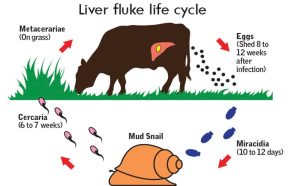 Recent climate monitoring shows that milder, wetter winters and warmer summers are shifting the seasonality and severity of liver fluke challenge. Historically an autumn/winter disease, evidence now shows acute and chronic fluke cases appearing much later into winter and even early spring. In 2025, SCOPS (scops.org.uk) and COWS reported acute cases as late as March, driven by ongoing pasture contamination and prolonged snail activity.
Forecasts (afbini.gov.uk) for autumn/winter 2025–2026 also predicted a high liver fluke risk across Northern Ireland, due to increased rainfall (up 16% above average) and mean temperatures of 14°C — ideal conditions for both snails and fluke development.
This shift means that traditional treatment timings may no longer align with infection risk, leaving cattle or sheep vulnerable if flukicides are given too early or without diagnostic confirmation.
The Need for Sustainable, Evidence‑Led Control
Given the growing challenges — including climate change, changing seasonality, and increasing reports of flukicide resistance — an effective and sustainable parasite control plan is essential. COWS recommends a multidisciplinary “test–assess–treat” approach, including:
- Strategic flukicide selection to reduce pasture contamination and minimise resistance. (COWS)
- Pasture management to limit access to snail habitats such as wet, poorly drained areas.
- Quarantine and testing of incoming stock to prevent the introduction of resistant parasites.
- Regular diagnostic testing (e.g., FEC, bulk tank milk ELISA, blood testing), especially in spring when adult fluke may be detected reliably. (SCOPS)
New research emphasises the need for better guidance and practical tools for farmers, particularly given the complexity of liver fluke epidemiology and mixed/conflicting advice across the industry. The FlukeMAP project highlights widespread uncertainty among farmers about optimal timing, diagnosis, and risk assessment. (farminguk.com)
Oxyclozanide: A Dependable Option in an Era of Resistance
To date, no resistance has been reported in adult-stage liver fluke to oxyclozanide, offering vets and farmers continued confidence in the effectiveness of Distocur as part of a fluke control programme.
Distocur is:
- Dual‑authorised for both cattle and sheep.
- Licensed for the treatment of adult Fasciola hepatica sensitive to oxyclozanide.
- Effective for the elimination of gravid tapeworm segments (Moniezia spp.).
With only two flukicides licensed for use in lactating dairy cows (Albendazole and Oxyclozanide), treatment options are limited. Distocur’s short milk withdrawal period of just 4.5 days offers a practical advantage over many alternative products. Meat and offal withdrawal periods are 13 days for cattle and 14 days for sheep, making it a flexible choice in both dairy and beef systems.
The Bigger Picture: Animal Health, Productivity & Environmental Impact
Liver fluke remains a moving target. Its life cycle depends heavily on weather patterns, snail populations, pasture conditions, and farm management practices. As climate change increases over‑winter survival of eggs, cysts, and mud snails, the disease is expected to pose a greater and more unpredictable challenge in future years.
Untreated or subclinical infections contribute significantly to productivity losses, reduce feed efficiency, and increase susceptibility to other diseases — all of which undermine animal welfare and increase the carbon footprint per litre of milk or kilogram of meat produced. Sustainable parasite control is therefore not only essential for farm profitability, but also for wider environmental goals.
Talk to DVS about your fluke management protocols.