
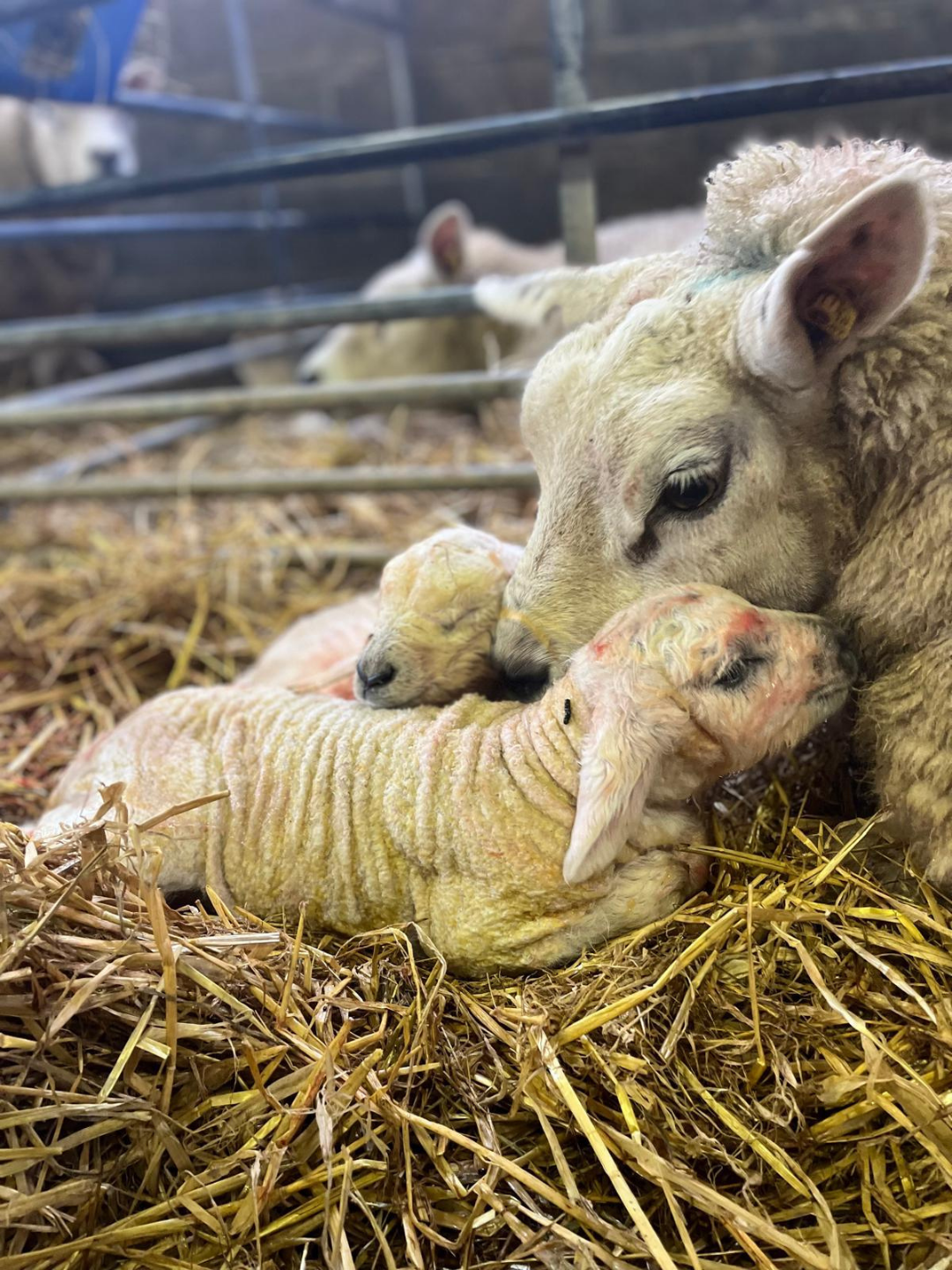
Its official, spring has sprung as we see the daffodils and snow drops raise their pleasing gold and white faces above the green (albeit wet) grass around us. Following these come the even cuter faces of newborn lambs out in fields and paddocks all around us.
This heralds the start of the lambing season and with it a potentially source of parasite pasture contamination from our pregnant ewes as some experience what we term the Peri-Parturient Relaxation in Immunity (PPR) or the periparturient rise.
This is a transient rise in faecal egg counts and egg shedding is thought to be associated with a wane in immunity in ewes around the time of lambing potentially due to hormones or to nutritional stress associated with the demands of lactation and grazing availability.

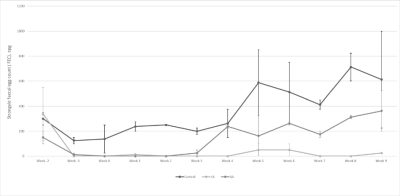 Fig 1. Mean strongyle FECs (+/- SE) of periparturient ewes receiving different treatments.Ref 2
https://doi.org/10.1371/journal.pone.0236143.g001
While the ewes themselves are mostly unbothered by this phenomenon it can result in shedding of higher levels of parasite eggs onto pastures that young lambs will potentially be grazing.
This means that new grazing lambs may be challenged not only by last year’s larvae that have overwintered from the previous grazing season but are also concurrently challenged by eggs from shedding ewes that larvate in the current grazing season.
Parasitic gastroenteritis is primality a disease of lambs and even modest burdens can have effects on performance, increasing costs and losses. Where parasitic egg output from ewes takes place on pasture where there is already elevated larval burdens this can tip the balance and result in parasitic gastroenteritis and disease in grazing lambs.
 Faecal egg counts at this time of year are useful to get a handle on what’s happening in the flock and act accordingly. Historically blanket worming of ewes was recommended, however now there is evidence to suggest that not all ewes need worming and combining diagnostics with factors such as nutrition, age, litter size and genetics can help reduce anthelmintic use and mitigate selection pressure for resistance.
OvaCyte now offers Speciation as part of its FEC allowing farmers and vets to get even more information about the population of parasites in their flock and instigate targeted treatment. OvaCyte Speciation identifies Haemonchus contortus, one of the more significant & potentially pathogenic parasites of sheep which can resume its development from an overwintering hypobiotic larvae to an egg producing adult in the face of the relaxed immunity in the ewe.
It is important to remember that monitoring and treating ewes at this time of year will not protect against Nematodirus battus and vigilance in monitoring the flock and referring to the Nematodirus hatching forecast, available for free from Met Éireann and SCOPs is crucial.
Remember that nutrition plays an important role in PPRI and that the immune system suffers at the expense of the ewes pregnancy and lactational demands. Single lamb ewes are reported to be less susceptible to PPRI but it has been shown that twin and triplet ewes that have good BCS and nutritional planes are also less susceptible but single lamb ewes in poor BCS can have high egg outputs.
It is also important to remember that each farm is an individual and that the PPRI on each in terms of magnitude and timing will be different. Simply relying on calendar dosing and litter size as a guide to dosing is not enough and using FECs prior to and after lambing combined with BCS monitoring gives a more target approach to monitoring and treating.
- Kerr, C et al A monitoring study to explore gastrointestinal helminth burdens of ewes of different fecundities in the periparturient
- period and effects on lamb growth rates 2016
- Kerr, C et al., PLOS ONE 2020. A practical farm-based trial to compare ewe nematode control strategies in periparturient ewes.
- https://www.scops.org.uk/news/18292/scops-encourages-sheep-farmers-to-take-practical-steps-to-reduce-wormer-use-this-lambing-season/
- https://www.scops.org.uk/news/19043/scops-highlights-findings-of-research-into-the-peri-parturient-rise/