
Clinical Considerations for Canine Cushing’s Disease Management
Canine hyperadrenocorticism (Cushing’s disease) is a commonly encountered endocrine disorder in small-animal practice, particularly in ageing dog populations. This means, that while medical management is well established, long-term success depends not only on drug choice and monitoring protocols, but also on formulation suitability, dosing accuracy, and client compliance.
This blog post will look at the prevalence and breed predispositions of canine Cushing’s disease, key clinical signs to be on the look-out for, challenges associated with tablet dosing, and subsequently how liquid medication formulations may help reduce treatment-related stress and improve outcomes.
Prevalence and Aetiology
Cushing’s disease is estimated to affect approximately 0.2% of the canine population (Schofield et al., 2022), with incidence increasing alongside improved diagnostic awareness and longer canine lifespans. The condition is most frequently diagnosed in middle-age and older dogs, with prevalence increasing with age and over-weight dogs (Schofield et al., 2022).
Approximately 80–85% of cases are pituitary-dependent hyperadrenocorticism (PDH) (Sanders et al., 2018), with the remaining 15–20% attributed to adrenal-dependent disease. Iatrogenic hyperadrenocorticism, while less common, should also be considered in patients with a history of prolonged glucocorticoid therapy.
Breed Predispositions
Although Cushing’s disease can occur in any breed, several show increased prevalence, particularly for PDH. Breeds most commonly overrepresented include:
- Border Terriers
- Miniature Schnauzers
- Bichon Frise
- Yorkshire Terriers
- Lhasa Apsos
- Jack Russell Terriers
- Dachshunds
Smaller breeds are most frequently affected, though adrenal-dependent disease may be more prevalent in larger breeds. Additionally, a slight female predisposition has been reported.
Clinical Presentation
Clinical signs are typically progressive and may be initially attributed to ageing. Common findings include: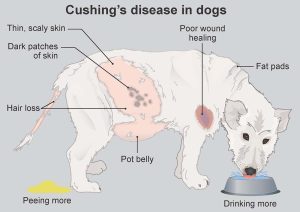
- Polyuria and polydipsia (in 82-91% of cases) (Bennaim et al., 2019)
- Polyphagia
- Excessive panting
- Abdominal distension due to hepatomegaly and muscle wasting
- Bilateral symmetrical alopecia
- Thin, fragile skin and delayed wound healing
- Lethargy and exercise intolerance
Given the chronic nature of the disease, this means that ongoing monitoring using ACTH stimulation testing or alternative protocols is essential to guide dose adjustments and minimise adverse effects.
Challenges of Tablet and Capsule Dosing
Medical management of Cushing’s disease requires precise, individualised dosing, often with frequent adjustments during stabilisation and long-term maintenance. Solid oral formulations can present several challenges in clinical practice:
- Limited dose flexibility, particularly for small dogs or patients requiring incremental dose changes
- Difficulty splitting tablets or capsules, leading to potential dose variability
- Compliance issues, especially in dogs with reduced appetite or aversion to oral tablets
- Client frustration, which may result in missed doses or inconsistent administration
Given the narrow therapeutic margin of commonly used medications, inconsistent dosing may increase the risk of inadequate disease control or adrenal suppression.
The Role of Liquid Medication Solutions
Liquid formulations, like the newly available, first licensed liquid trilostane; Trilocur, 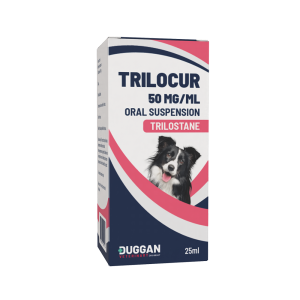 can offer practical advantages that may support both clinical management and client compliance:
- Improved dosing accuracy, allowing fine adjustments based on patient response
- Greater flexibility, particularly useful during induction, titration, or in patients at dosing extremes
- Simplified administration, which may be mixed with food or administered directly, reducing stress for both patient and owner
- Enhanced compliance, supporting more consistent cortisol control and long-term disease stability
For chronic, lifelong conditions such as Cushing’s disease, these advantages may translate into improved clinical outcomes and stronger client adherence to treatment plans.
Conclusion
Effective management of canine Cushing’s disease extends beyond diagnosis and drug selection. Formulation choice plays an important role in dosing precision, patient tolerance, and owner compliance — all of which contribute to long-term success.
Trilocur is the first licensed liquid trilostane to the UK/IE market.
- Liquid formulation – simple to administer, no need for tablet splitting
- Precise dosing – liquid formulation allows for more precise dose adjustments and titration based on the needs of the patient
- 1ml and 5ml syringes provided for more dose flexibility and accuracy
If you are exploring alternative medication options to better support your patients with Cushing’s disease, speak to Duggan Veterinary Supplies about Trilocur to learn more about flexible dosing solutions and how it can integrate into your current treatment protocols.
IE: email: sales@dugganvet.ie phone: +353 (0) 504 43169
UK: uksales@dugganvet.com phone: +44 (0) 2476 100696