
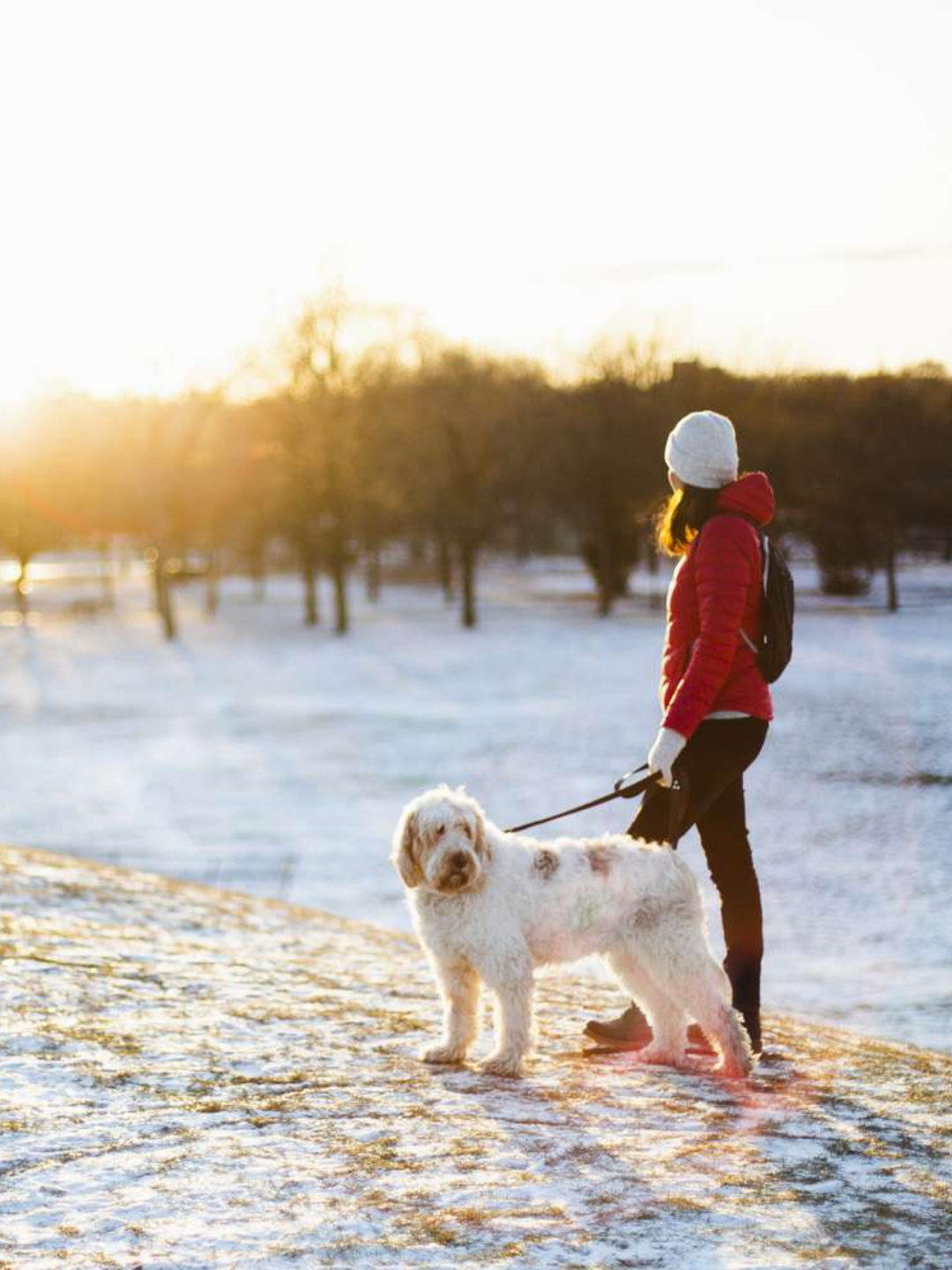
Hidden Dangers to Watch For and How to Protect your Dog on Winter Walks
Cold weather can be tougher on dogs than many people realise. Even breeds with thick coats can struggle in freezing temperatures, and smaller or short‑haired dogs are especially vulnerable. Frostbite and hypothermia are real risks, particularly for paws, ears, and tails. If your dog starts shivering, lifting their paws repeatedly, or slowing down, it’s time to head home.
Roads and footpaths treated with salt and grit can also irritate paw pads. These substances can cause cracking, soreness, and chemical burns. If your dog licks their paws afterwards, it may lead to stomach upset or poisoning. Protect your dog on winter walks, always wipe their paws thoroughly after.
Poison Warnings Every Dog Owner Should Know
Winter brings an increase in toxic hazards, many of which are common around homes and public areas:
- Antifreeze (ethylene glycol): Highly toxic and often fatal, even in tiny amounts. It has a sweet taste that attracts dogs, so keep containers sealed and clean up spills immediately.
- De‑icing salts: Some contain harmful chemicals that can irritate skin or cause illness if ingested.
- Rodent poisons: More commonly used in winter and extremely dangerous to pets.
 Toxic winter plants: Holly, ivy, and mistletoe can cause vomiting, diarrhoea, and more severe symptoms if eaten.
If you suspect your dog has ingested anything harmful, contact your vet immediately. Quick action can save lives.
Tips to Keep Your Dog Safe This Winter
To help protect your dog on winter walks, he few simple precautions can make winter walks safer and more enjoyable:
- Use a well‑fitted coat for small, elderly, or short‑haired dogs to help them retain body heat.
- Choose reflective gear – winter days are short, and visibility is poor. Reflective collars, leads, and jackets help keep both you and your dog safe.
- Walk during daylight whenever possible to avoid icy patches and hidden hazards.
- Keep dogs on lead near frozen water. Ponds and lakes may look solid but can crack under weight.
- Moisturise paw pads with a pet‑safe balm to prevent cracking.
- Short, frequent walks are better than long outings in extreme cold.
January: Walk Your Dog Month
After the indulgence of the festive season, January is the ideal time to reset routines – for both humans and pets. Walk Your Dog Month encourages owners to get outside, boost their dog’s physical and mental wellbeing, and strengthen the bond you share. Even a short daily walk can improve behaviour, reduce anxiety, and support healthy weight management.
At Duggan Veterinary Supplies, we’re passionate about helping pets thrive all year round. With the right preparation and awareness, winter walks can remain a safe and enjoyable part of your dog’s routine. You can read more information on the RSPCA website here – Winter & Cold Weather Care for Dogs – RSPCA – rspca.org.uk